


 News Article
What’s inside a vape?
E-cigarette product design has evolved significantly over the past two decades: from boxy mods and tanks to pod-based products like JUUL, to the high-nicotine disposable vapes that dominate the market today.
Disposable e-cigarettes are the most commonly used product among young e-cigarette users and are stronger and cheaper than ever before – offering higher concentrations of nicotine at startlingly low prices. Many of these products are on the market illegally, and contain “smart” features, such as Bluetooth connectivity, puff tracking, and games.
While e-cigarette design continues to evolve, these four basic components of e-cigarette technology have remained largely the same.
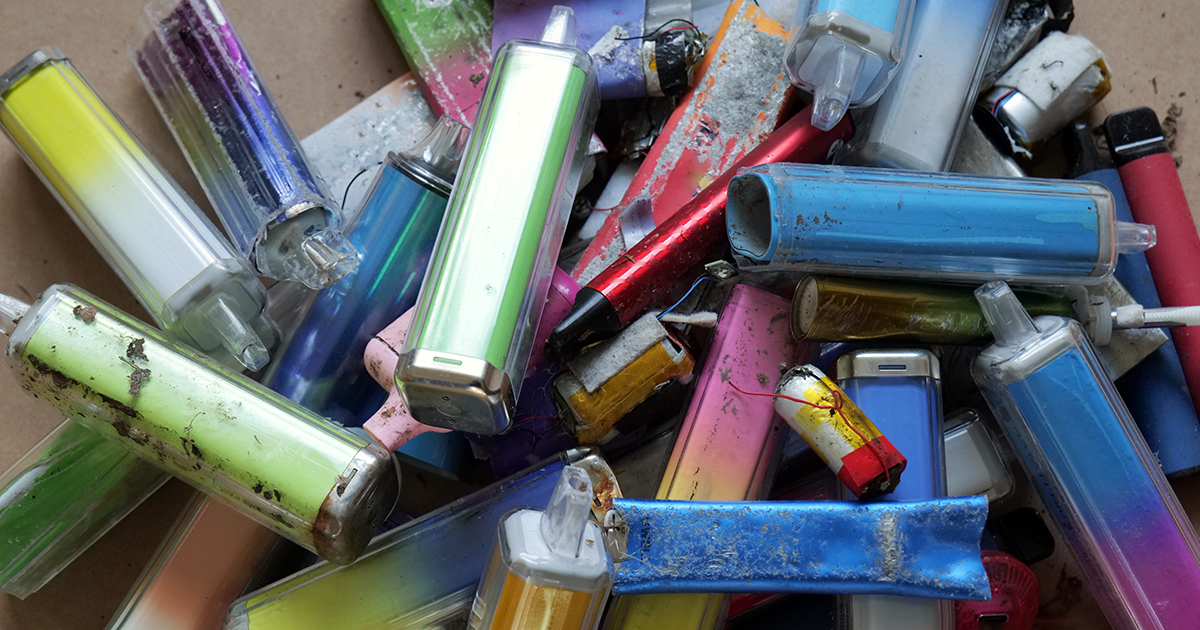
Nicotine e-liquid
Nicotine e-liquid, also known as “vape juice” or “e-juice” contains nicotine, flavors, propylene glycol, vegetable glycerin, and other ingredients combined into a liquid that is heated until vaporized for inhaling.
Nicotine e-liquid can come in a pre-filled pod, as in the case of pod-based products such as JUUL, or can be purchased separately and used to refill a reusable product. Disposable e-cigarettes contain a set amount of nicotine e-liquid and are intended to be thrown away after the e-liquid is depleted.
According to a study from the University of California, Davis, the vapor from disposable e-cigarettes can contain toxic chemicals, including lead.
Mouthpiece
The e-cigarette mouthpiece allows the transfer of the aerosol into the mouth and lungs.
Battery
E-cigarettes are powered by a lithium-ion battery. Some products, typically larger e-cigarettes with more e-liquid capacity, are rechargeable and contain a charging port to recharge the battery.
The lithium-ion batteries in e-cigarettes pose a number of risks, both to humans and the environment.
Environmental risks: Since recycling programs and safe disposal guidelines for disposable e-cigarettes are virtually non-existent, most users have no choice but to dispose of e-cigarettes in the regular trash, contributing to kilotons of electronic waste that already exists in landfills. Electronic waste does not biodegrade and can release toxic waste that can accumulate in the water and soil.
Safety risks: The lithium-ion batteries in e-cigarettes have been known to explode when crushed or removed, causing fires in trash facilities. Cases of spontaneous combustion have also been recorded. A study found that between 2015 and 2017, there were an estimated 2035 e-cigarette explosion and burn injuries recorded across U.S. hospital emergency departments.
Coil and wick
A metal coil is wrapped in a cotton wick that absorbs the e-liquid. The coil is heated by the battery, vaporizing the e-liquid into an aerosol that can be inhaled.
There is a misconception that the aerosol produced from heated nicotine e-liquid is harmless. However, the coil releases heavy metals when heated, which becomes part of the aerosol that users inhale.
Aerosols from disposable e-cigarettes can also include flavor chemicals, synthetic coolants, and other additives, which can exceed the threshold for toxic effects. According to a study from UC Davis, disposable e-cigarettes can release higher amounts of toxic metals than older e-cigarettes and combustible cigarettes, with one product in the study releasing more lead during a day’s use than nearly 20 packs of cigarettes.
While these components of e-cigarette product design have persisted through the decades, they are nowhere near perfect or safe. People who use e-cigarettes should understand what’s inside their products, and the risks to health and safety that they may pose.
More in emerging tobacco products



Want support quitting? Join EX Program
By clicking JOIN, you agree to the Terms, Text Message Terms and Privacy Policy.
Msg&Data rates may apply; msgs are automated.