


 News Article
What is hookah?
Among the growing variety of flavored tobacco products, one traditional form remains largely overlooked: the hookah. This centuries-old waterpipe is used for smoking flavored tobacco called shisha, which is heated by charcoal to create smoke that is inhaled through a hose and mouthpiece.
Hookah is available in a wide range of fruit and candy flavors, and it's often smoked in group settings. The combination of sweet flavors and social use can make hookah appealing to young people, for whom nicotine addiction can have serious consequences. Nicotine use can harm the developing brain and make young people more susceptible to addiction later in life, and nicotine addiction can increase stress and intensify symptoms of depression and anxiety.
Here are some important things to know about hookah use.

Who uses hookah?
Youth use:
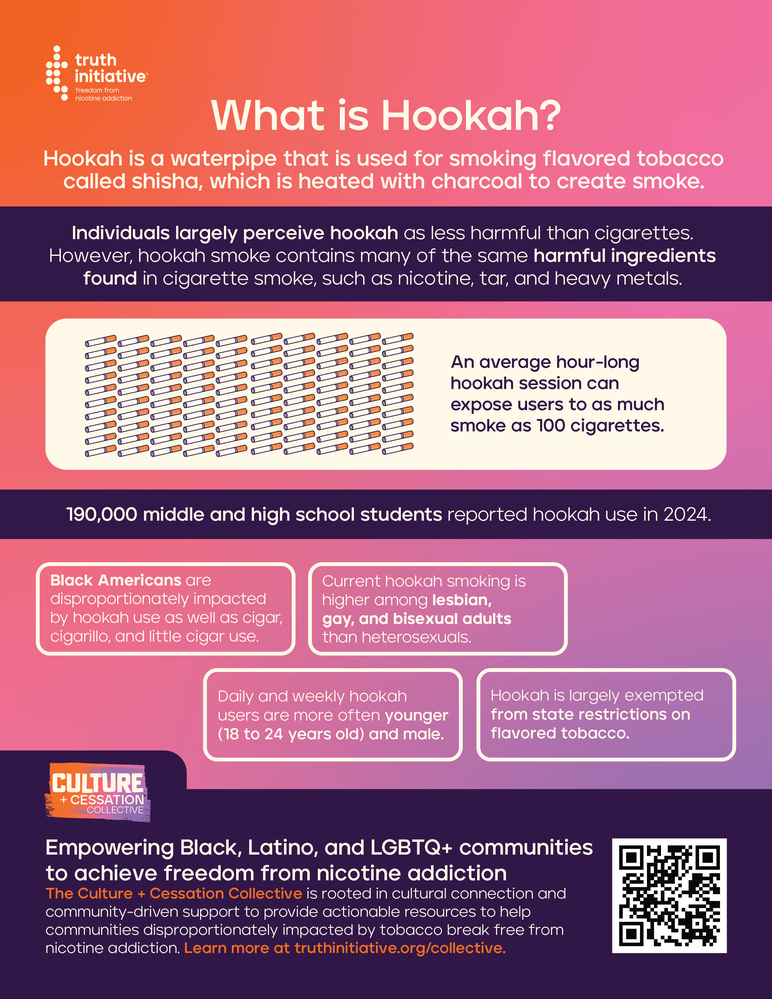
In 2024, 190,000 middle and high school students reported current hookah use.
- Any exposure to nicotine poses a serious risk to young people.
Young adult use:
- Daily and weekly users are associated with younger age (18 to 24 years old) and the male gender.
Demographic trends:
- Black Americans are disproportionately impacted by hookah use as well as cigar, cigarillo, and little cigar use.
- Current hookah smoking is higher among lesbian, gay, and bisexual adults compared to their heterosexual peers.
What are the health effects of hookah?
An average hour-long hookah session can expose users to as much smoke as 100 cigarettes. Due to this exposure, hookah users are at risk for many of the same diseases associated with cigarette smoking, including lung cancer, respiratory illness, and periodontal disease. There is also a significant amount of nicotine in hookah. Youth use of nicotine in any form is unsafe, as it disrupts the formation of brain circuits that control attention, learning, and susceptibility to addiction.
Despite the data, people largely perceive hookah as less harmful than cigarettes. However, hookah smoke contains many of the same harmful ingredients found in cigarette smoke, such as nicotine, tar, and heavy metals. Hookah users also believe that hookah is less addictive and more socially acceptable than cigarette smoking.
How is hookah regulated?
Federal law sets the minimum age to purchase and use hookah at 21 years old. Like any other tobacco product, retailers are required to verify age and comply with labeling, packaging, and marketing restrictions.
Many states have imposed restrictions on flavored tobacco products (notably e-cigarettes), but hookah is often exempted from these rules. Lobbying from the hookah industry has successfully pushed for exemption, arguing that hookah holds cultural or religious importance for Middle Eastern communities. Regulations on hookah should focus on limiting youth exposure.
Community-driven resources
The tobacco industry has, and continues to, disproportionately target the LGBTQ+ and Black communities with advertising, coupons, and flavored products, leading to increased tobacco use prevalence – including hookah smoking.
To empower LGBTQ+, Black, and Hispanic/Latino communities to live free from nicotine addiction, Truth Initiative has launched the Culture + Cessation Collective to build lasting partnerships that drive culturally responsive, community-led solutions for tobacco cessation.
The Culture + Cessation Collective includes three coalitions of community leaders – Pride + Progress, Breath of Freedom, and Respira Vida – each focused on the unique needs of the LGBTQ+, Black, and Hispanic/Latino communities. Coalitions gather for facilitated discussions centered on cultural sensitivity, community-specific challenges, and practical solutions, all with a policy-driven approach to ending nicotine addiction in these communities.
Learn more about the Collective or join here to receive the latest updates, newsletters, and opportunities for involvement.
Quitting hookah and other nicotine and tobacco products
Quitting hookah can be difficult, as the high nicotine content in hookah can lead to addiction. Fortunately, many of the same methods used to quit smoking, vaping, or any nicotine product can also help people quit smoking hookah.
Truth Initiative’s EX Program, a free digital cessation program developed with Mayo Clinic, can increase the odds of quitting by up to 40% and offers personalized quit plans, tips and advice from Mayo Clinic, and the most established online quitting community to help people of all ages quit any type of tobacco or nicotine product.
People interested in quitting can text EXPROGRAM to 88709 to join.
More in traditional tobacco products


Want support quitting? Join EX Program
By clicking JOIN, you agree to the Terms, Text Message Terms and Privacy Policy.
Msg&Data rates may apply; msgs are automated.