


 News Article
College grantees are reshaping campus culture around nicotine use
Across the country, college students are leading creative initiatives to bring awareness to their 100% tobacco/nicotine-free campus policies and share resources for quitting.
As part of Truth Initiative’s Tobacco/Nicotine-Free College Program, student leaders are developing peer-driven campaigns, expanding quit support, and changing the conversation about nicotine use on their campuses.
We caught up with college leaders on three campuses where student-led initiatives to promote quitting and tobacco-free policies have impacted over 113,000 students, faculty and staff.
Here's a look at what our college leaders have been up to.
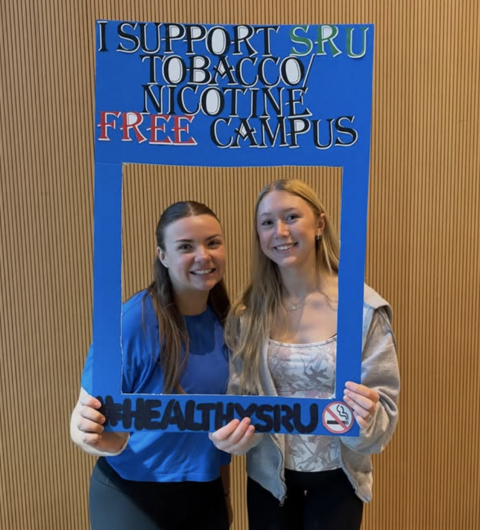
Slippery Rock University, Slippery Rock, PA
To reach students with messages on quitting and the importance of nicotine-free campus policies, College Leaders Julia Gesing and Kaila Jones launched an Instagram account to bring quitting resources and policy advocacy directly to the digital spaces where students interact. The account features interviews where students weigh in on the impact of vaping nicotine on daily life, the most surprising places they've seen people vape, and how they feel about 100% tobacco/nicotine-free campus policies.
“Recovery is really hard, and progress isn’t always linear. There’s going to be ups and downs and setbacks, but it's really worth it.”
- Slippery Rock student when asked what they would say to someone who is trying to quit vaping
Julia and Kaila also produced a video that takes on some of the most common misconceptions students hold about nicotine, including the idea that vaping nicotine can help reduce stress and that oral nicotine pouches are safe. The posts also reach students with information about EX Program, Truth Initiative’s free digital quitting program.
| 
|
University of Missouri – Columbia, Columbia, MO
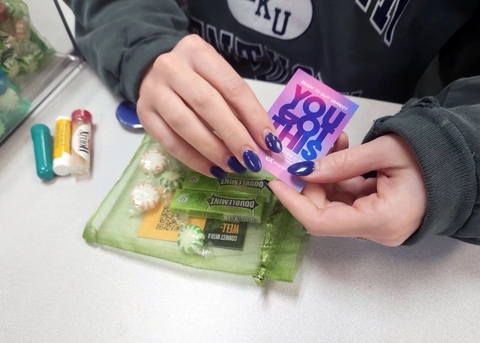
At University of Missouri – Columbia, College Leader Patty Kirtley runs "Resource Mondays" each week at the Wellness Resource Center, offering students one-on-one support to quit tobacco and nicotine. Patty, who is trained in motivational interviewing, typically meets with two to three students a week and helps them enroll in EX Program, learn about nicotine replacement therapy (NRT), and pick up quit kits.
Resource Mondays are designed to feel welcoming, not clinical. At a recent session, students decorated their own mini containers to hold their NRT. The drop-in sessions complement the university’s Well-Being Coaching program, where students can book appointments with certified coaches to talk about nicotine, tobacco, and cannabis use, as well as other substance use and health behaviors concerns.

| 
|
Florida International University, Miami, FL
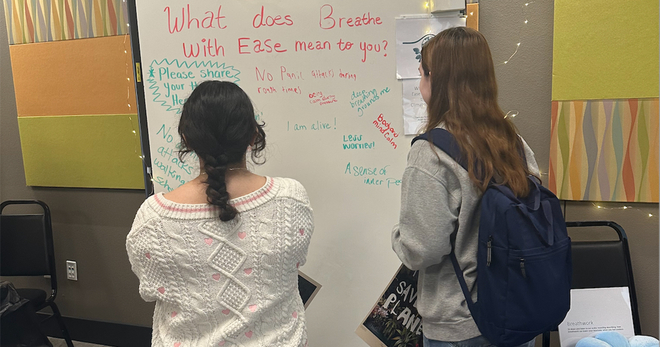
At FIU, College Leader Gabriella Gorbea trained 12 fellow peer health educators in the university's Healthy Living Program on nicotine addiction and quitting with EX Program. As a result, peer educators are equipped to talk with classmates about quitting nicotine during one-on-one sessions, at events, and in everyday interactions. Peer voices can be especially influential, as they're often more relatable and less judgmental, which helps cut through the shame and stigma that young people can feel about tobacco and nicotine use.
Gabriella and fellow College Leader Alana Maceyras also teamed up with the campus line dancing club to host a western-themed Healthy Living Program Rodeo, welcoming 282 students and hosting interactive activities, giveaways, and sparking conversations about FIU's 100% tobacco/nicotine-free campus policy.

| 
|
About the Truth Initiative Tobacco/Nicotine-Free College Program
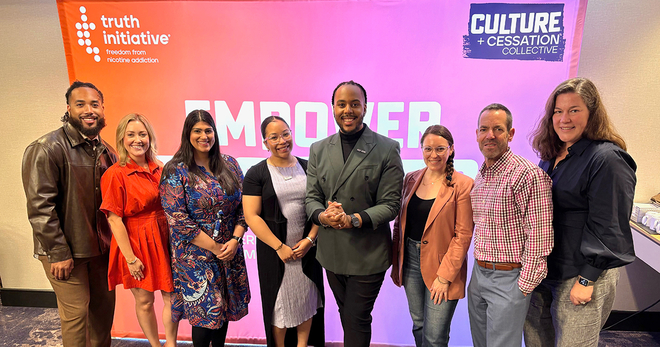
Truth Initiative awarded 15 grants to colleges and universities in 2025, each receiving up to $20,000 to support the adoption or implementation of 100% tobacco/nicotine-free policies and provide students, faculty, and staff with resources to quit.
With nearly all smokers starting before age 26 and e-cigarette use alarmingly high among young adults ages 18-24, colleges and universities are crucial to preventing nicotine addiction among young adults and providing resources to quit.
Since 2015, Truth Initiative has impacted 2.7 million students, faculty, and staff across 250 colleges, universities, and college systems, inspiring a culture of quitting and increasing access to proven quitting resources.
Questions about the program? Contact Kristen Tertzakian at [email protected]
More in tobacco prevention efforts

Want support quitting? Join EX Program
By clicking JOIN, you agree to the Terms, Text Message Terms and Privacy Policy.
Msg&Data rates may apply; msgs are automated.