



 Fact Sheet
Tobacco use: Vermont 2026
Cigarette use: Vermont*
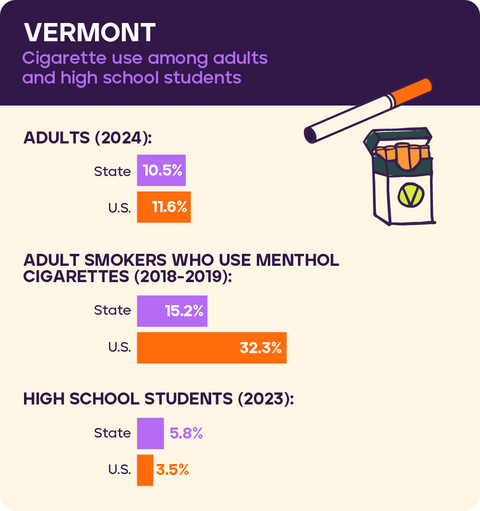
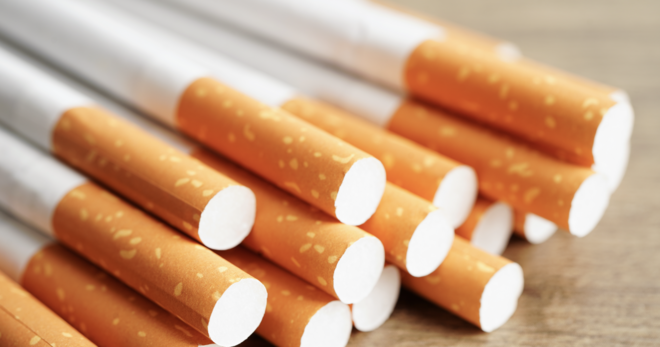
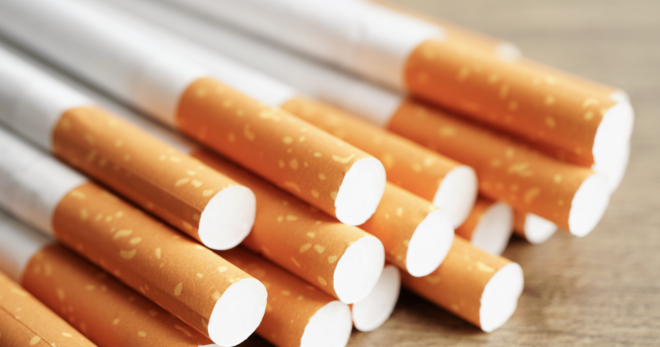
- In 2024, 11.3% of adults smoked. Nationally, the adult cigarette smoking prevalence was 11.6%.
- In 2018-2019, 15.2% of adults who smoked in Vermont smoked menthol cigarettes. Nationally, 32.3% of adult smokers used menthol cigarettes during this period.
- In 2023, 5.8% of high school students in Vermont smoked cigarettes on at least one day in the past 30 days. Nationally, the cigarette smoking prevalence among high school students was 3.5%.
Other tobacco product use: Vermont*
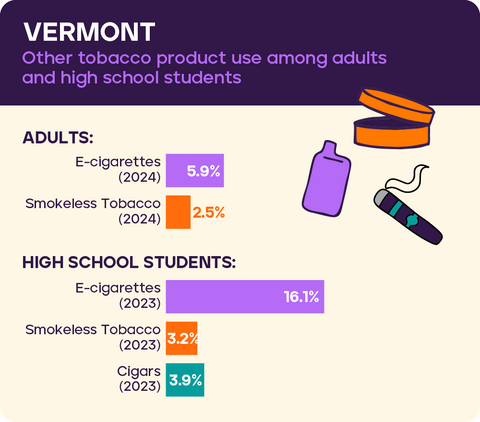
- In 2024, 4.9% of adults in Vermont used e-cigarettes. Nationally, the adult e-cigarette use prevalence was 8.0%.
- In 2024, 2.1% of adults in Vermont used smokeless tobacco every day or some days. Nationally, the adult smokeless tobacco use prevalence was 3.2%.
- In 2023, 16.1% of high school students in Vermont used electronic vapor products on at least one day in the past 30 days. Nationally, the e-cigarette use prevalence among high school students was 16.8%.
- In 2023, 3.2% of high school students in Vermont used chewing tobacco, snuff or dip on at least one day in the past 30 days. Nationally, the smokeless tobacco use prevalence among high school students was 2.3%.
- In 2023, 3.9% of high school students in Vermont smoked cigars, cigarillos or little cigars on at least one day in the past 30 days. Nationally, the cigar use prevalence among high school students was 4.5%.
Economics of tobacco use and tobacco control
- Vermont received $90.1 million (estimated) in revenue from tobacco settlement payments and taxes in fiscal year 2026.
- Of this, the state allocated $2.6 million in state funds to tobacco prevention in fiscal year 2026, 30.8% of the Centers for Disease Control and Prevention's annual spending target.
- Smoking-caused health care costs: $404 million per year.
- Smoking-caused losses in productivity: $576.2 million per year.
Vermont tobacco laws
Tobacco taxes
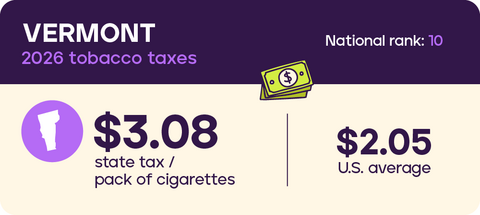
- Vermont is ranked 10th in the U.S. for its cigarette tax of $3.08 per pack (enacted July 2015), compared to the national average of $2.05. (New York has the highest tax at $5.35 and Missouri has the lowest at 17 cents.)
- Little cigars are taxed at 15.4 cents per cigar.
- Roll-your-own tobacco is taxed at $3.08 per 0.0325 ounces.
- Snuff is taxed at $2.57 per ounce.
- New smokeless tobacco is taxed at $2.57 per ounce, or if sold in a package weighing less than 1.2 ounces, $3.08 per package.
- Cigars with a wholesale price greater than $2.17 and less than $10 are taxed at $2.00 per cigar. Cigars with a wholesale price of $10.00 or more are taxed at $4.00 per cigar.
- All other tobacco products, including e-cigarettes, are taxed at 92% of the wholesale price.
Clean indoor air ordinances
- Smoking is prohibited in government workplaces, private workplaces, schools, childcare facilities, restaurants, bars, and retail stores.
- The use of tobacco substitutes is restricted similar to smoking and is prohibited in public places, including indoor public places, grounds of publicly owned buildings and within 25 feet of any state-owned building, and in workplaces (with some exceptions).
- The use of tobacco substitutes is prohibited at child care facilities, afterschool programs, on public school grounds, and at sponsored events. Use of tobacco substitutes is also prohibited in cars occupied by a minor.
- E-cigarettes are included in the state's clean indoor air laws and the state's definition of tobacco products.
Licensing laws
- Retailers and wholesalers are required to obtain a license to sell tobacco products.
- Retailers and wholesalers are required to obtain a license to sell e-cigarette products.
Youth access laws
- In December 2019, the United States adopted a law raising the federal minimum age of sale of all tobacco products to 21, effective immediately.
- Establishments are required to post signs stating that sales to people under 21 are prohibited.
- People under 21 are prohibited from buying bidis and/or tobacco substitutes, including e-cigarettes.
- Self-service displays are restricted to locations inaccessible to persons under 21.
- No person under the age of 16 years may sell tobacco substitutes.
- Mail and phone orders and internet sales of tobacco substitutes and nicotine-containing substances are restricted to sales to licensed wholesalers and retailers.
Quitting statistics and benefits
- The CDC estimates 46.5% of daily adult smokers in Vermont quit smoking for one or more days in 2019.
- In 2014, the Affordable Care Act required that Medicaid programs cover all tobacco cessation medications.**
- Vermont's state quit line invests $7.91 per smoker, compared to the national median of $2.62.
- Vermont has a private insurance mandate provision for cessation.
Notes and references (March 2026)
- The datasets for both adults and youth prevalence were used to make direct comparisons at the state and national levels. National prevalence reported here may differ from what is reported in our national-level fact sheets. The numbers here also reflect the most recent data available. Dates of available data may differ across state fact sheets.
** The seven recommended cessation medications are NRT gum, NRT patch, NRT nasal spray, NRT inhaler, NRT lozenge, Varenicline (Chantix) and Bupropion (Zyban).
Fiore MC, et al. Treating Tobacco Use and Dependence: 2008 Update. Clinical Practice Guideline. Rockville, MD: US Department of Health and Human Services, Public Health Service; May 2008.
- CDC. (2024). Behavioral Risk Factor Surveillance System.
- CDC. (2024). State Menthol Fact Sheets.
- CDC. (2023). Youth Risk Behavioral Surveillance System.
- Campaign for Tobacco-Free Kids. (2026). Broken Promises to Our Children: A State-by-State Look at the 1998 State Tobacco Settlement 24 Years Later FY2024.
- Campaign for Tobacco-Free Kids. (2024). The Toll of Tobacco in the United States.
- American Lung Association. (2026). State Legislated Actions on Tobacco Issues (SLATI).
- American Lung Association. (2026). State of Tobacco Control.
- Campaign for Tobacco-Free Kids. (June 14, 2024). State Cigarette Excise Tax Rates & Rankings.
https://assets.tobaccofreekids.org/factsheets/0097.pdf - Public Health Law Center. (June 15, 2024). U.S. E-Cigarette Regulations: 50 State Review.
https://www.publichealthlawcenter.org/resources/us-e-cigarette-regulations-50-state-review - FDA. (2024). Tobacco 21.
https://www.fda.gov/tobacco-products/retail-sales-tobacco-products/tobacco-21 - CDC. (2024). Behavioral Risk Factor Surveillance System, State Tobacco Activities Tracking and Evaluation System.
More in smoking by region
Want support quitting? Join EX Program
Enter your mobile number to join EX Program. You will receive daily texts full of tips, advice, and support. Cancel any time by texting “stop”.
By clicking JOIN, you agree to the Terms, Text Message Terms and Privacy Policy.
Msg&Data rates may apply; msgs are automated.