


 News Article
What are nicotine analogs? How a tiny chemical distinction creates a regulatory gap
Nicotine analogs are chemical compounds that are structurally similar, but not identical, to nicotine and have activity at nicotinic receptors in the brain.
The most common example is 6-methyl nicotine, a compound that has a similar structure to nicotine with the addition of one methyl group. Because its structure is so similar to nicotine, 6-methyl nicotine can bind to several of the same nicotinic receptors in the brain. Some companies may sell products containing nicotine analog formulations sold under trademarked names such as Metatine, Imotine, Nixodine, NoNic6, or Ceretine.
The chemical differences that distinguish nicotine from nicotine analogs may seem small, but they allow nicotine analog products to fall outside of federal, state, and local laws and regulations, creating loopholes in policies designed to prevent addiction and protect young people.
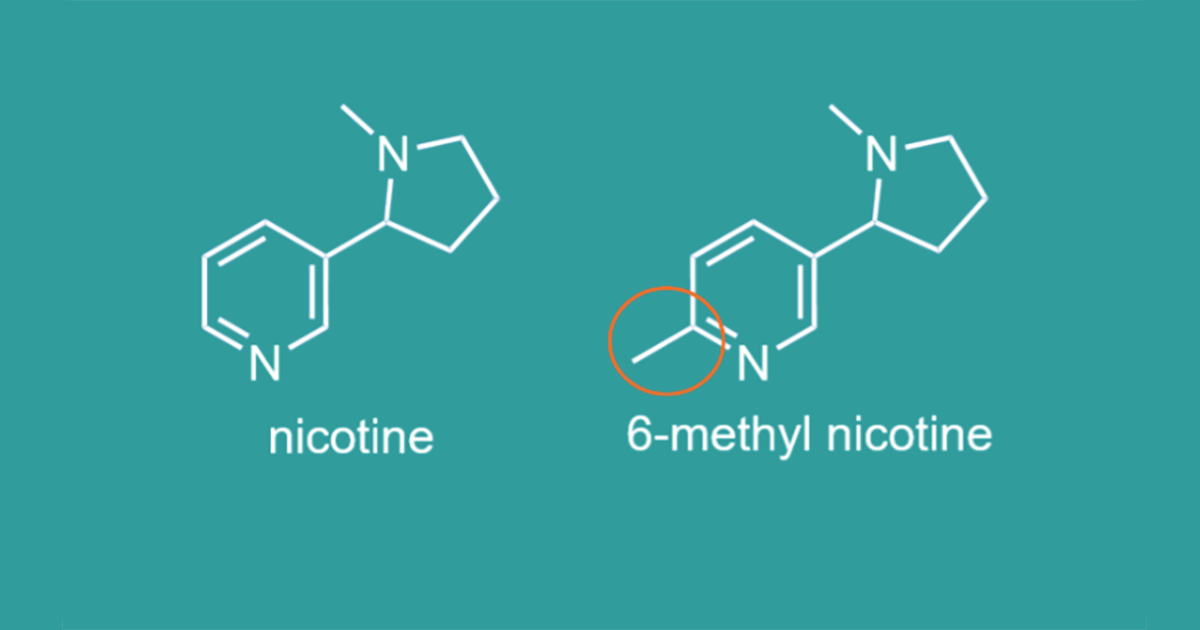
Designed to beat regulation: The origins of nicotine analogs
Tobacco industry research on nicotine analogs began as early as the 1970’s, when cigarette companies started exploring compounds that could potentially replace nicotine while producing a similar sensation with fewer side effects. Philip Morris ran a program called the Nicotine Analog Program and R.J. Reynolds later developed a program in the 1980s’ called the Committee on Nicotine Analog Research.
Industry interest in these compounds appears to have been driven in part by the possibility of creating more appealing products and evading future nicotine regulations.
How a regulatory gap allows analog products to be marketed to young people
Nicotine analog products are not currently regulated by the Food and Drug Administration (FDA) as tobacco products or as drugs. Manufacturers use nicotine analogs because these compounds fall outside of laws written specifically for nicotine, allowing products to enter the market without regulation.
This regulatory gap allows products containing nicotine analogs to be marketed and sold despite restrictions intended to regulate the sale of nicotine products and protect young people from starting to use nicotine.
In some cases, as with the brand Spree Bar — an e-cigarette that contains 6-methyl nicotine — companies claim that their products are “exempt” from seeking pre-market authorization, which is required for nicotine e-cigarettes. It was also found that Spree Bar products are promoted through convenience store advertising and web channels using youth- and young adult-appealing AI-generated characters.

However, some states and cities are taking action. California and Denver, CO have included nicotine analog products in their flavor restriction policies and Indiana has banned the sale of products made with nicotine analogs. Nonetheless, most federal, state, and local tobacco control policies currently do not cover analog products.
Defining “nicotine”
The U.S. Family Smoking Prevention and Tobacco Control Act (TCA) gave the FDA the authority to regulate tobacco products “made or derived from tobacco.” Because of the introduction of synthetic nicotine products to the market, Congress expanded the definition of tobacco product in 2022 to include products “containing nicotine from any source.” Because “nicotine” is defined as a chemical compound with a specific chemical formula, nicotine analogs are not yet regulated by the FDA as tobacco products.
However, nicotine analog products have known pharmacological effects and do fit within the definition of a drug. Per the Federal Food, Drug, and Cosmetic Act, “the term ‘drug’ is defined as “articles (other than food) intended to affect the structure or any function of the body of man or other animals.” Truth Initiative urges the FDA to remove all unauthorized nicotine analog products from the market.
Are nicotine analogs safer or less addictive compared to nicotine?
There is no evidence that 6-methyl-nicotine is less addictive or safer than nicotine.
While research is still developing, laboratory studies have raised concerns. Animal and in vitro studies suggest that 6-methyl nicotine is more lethal and toxic compared to nicotine. Additionally, laboratory studies investigating nicotine receptor binding have found that 6-methyl nicotine is as addictive or possibly more addictive than nicotine.
Analog ingredients should be clearly labeled for consumer transparency
It may not always be clear when vapes, pouches, or other products contain nicotine analogs, as companies do not always clearly disclose the specific chemicals used in their products.
Additionally, independent lab testing has found that some nicotine analog products often contain lower concentrations than what is listed on product labels, highlighting the need for FDA regulation and accurate product labels.
Case Study: SETT Pouches
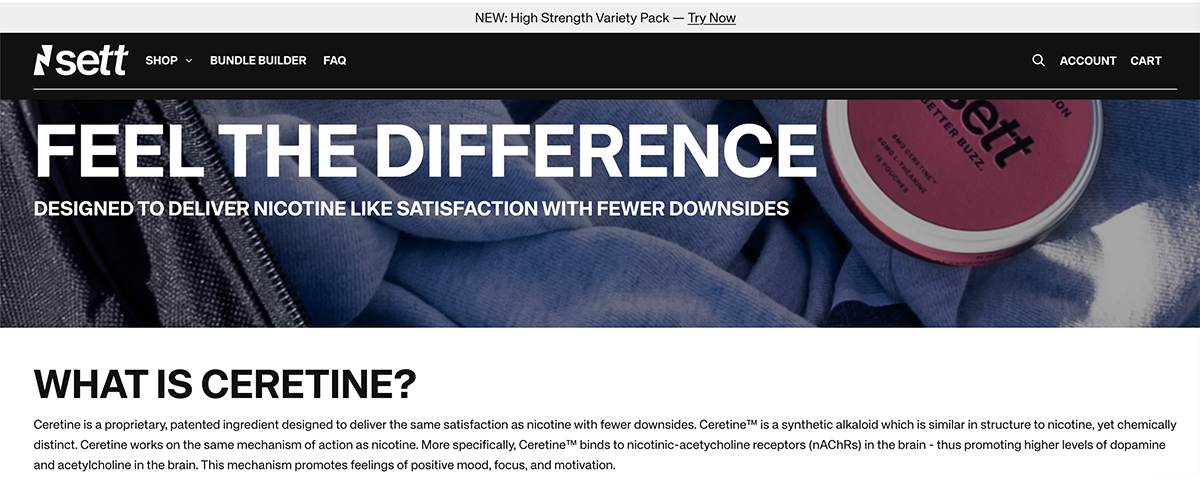
One product called SETT — pouches made with 6-methyl nicotine trademarked as “Ceretine” — is marketed as a “superior nicotine alternative” that is “designed to deliver the same satisfaction as nicotine with fewer downsides,” as the image of their website below shows.
These products have not been authorized by the FDA, nor have these claims been linked to any long-term, peer-reviewed longitudinal studies. SETT products also use flavors, which can increase appeal among young people.
More in emerging tobacco products




Want support quitting? Join EX Program
By clicking JOIN, you agree to the Terms, Text Message Terms and Privacy Policy.
Msg&Data rates may apply; msgs are automated.